
K-9 Search and Rescue Dog Locates Missing Woman in Dense Woodlands: A Triumph of Canine Olfaction and Training
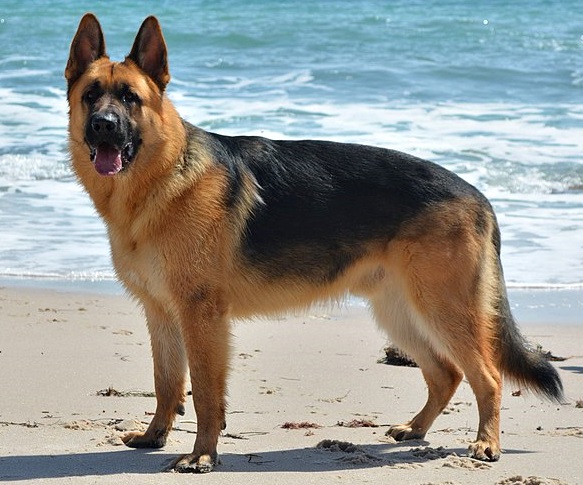
In a remarkable display of skill, endurance, and the unparalleled capabilities of canine olfaction, a trained K-9 Search and Rescue (SAR) team successfully located a missing 64-year-old woman in a dense, heavily wooded area earlier this week. The deployment, which spanned several hours under fading daylight and challenging topographic conditions, underscores the critical role that working dogs play in emergency response. When human visual tracking becomes compromised by thick underbrush and dropping temperatures, the canine nose remains an infallible instrument of detection.
The incident began when local emergency services received a call regarding a hiker who had become disoriented and separated from her group. As hours passed and the ambient temperature began to drop, the urgency of the situation escalated. Traditional ground search operations—comprising lines of volunteers walking grid patterns—are effective but incredibly time-consuming. In a race against time and the elements, incident commanders deployed a specialized K-9 SAR team to clear massive swaths of the wilderness rapidly.
Within just two hours of active deployment, the K-9 unit successfully detected the subject’s scent plume, navigated through dense thickets, and signaled the find. The woman was recovered safely, suffering only mild dehydration, and was returned to her family. While the outcome is joyous, the mechanics of how this rescue was achieved rely on an intricate combination of biological science, rigorous training regimens, and the selfless dedication of volunteer SAR handlers.
The Science of Canine Olfaction: Air Scenting vs. Tracking
To understand how a K-9 can locate a single human being in hundreds of acres of unbroken wilderness, one must examine the profound biological advantage of the canine olfactory system. A dog possesses up to 300 million olfactory receptors in their nose, compared to a human’s mere six million. Furthermore, the part of a dog’s brain devoted to analyzing odors is, proportionally speaking, 40 times greater than that of a human.
In wilderness search and rescue operations, dogs are generally categorized into two primary disciplines: Tracking/Trailing and Air Scenting (also known as area search).
Tracking and Trailing
Tracking dogs operate primarily with their noses to the ground. They are trained to follow the crushed vegetation, disturbed earth, and specific human scent (skin rafts) that fall off a person as they walk. A trailing dog works similarly but is more flexible; they will follow the “scent pool” as it drifts slightly off the physical footsteps, occasionally lifting their heads to catch the scent on the wind. These dogs are typically given a “scent article” (such as a piece of the missing person’s clothing) and are tasked with following that specific individual’s trail from their last known location.
Air Scenting (Area Search)
In the case of this recent woodland rescue, the dense underbrush and lack of a definitive starting point made it an ideal scenario for an Air Scenting dog. Unlike trackers, air scenting dogs work with their noses in the air. They do not follow a specific path on the ground; instead, they cast back and forth across a designated grid, seeking the airborne scent cone of any human in the area.
Humans constantly shed microscopic skin cells (rafts)—approximately 40,000 per minute. These rafts are carried by wind currents, creating a invisible “scent cone” that spreads out and drifts downwind. An air scenting dog bounds through the forest, actively searching for the edge of this cone. Once they hit the scent, they follow it upwind to its strongest point—the missing person. Because they are not restricted to following a path, air scent dogs can clear vast areas of challenging terrain far faster than human searchers.
The Rigorous Training Pipeline
The seamless execution of a rescue like this is not the result of a dog’s natural instinct alone; it is the product of thousands of hours of highly structured, repetitive, and rigorous training. The pipeline to certify a K-9 SAR team is grueling, often taking two to three years of daily commitment before a dog and handler are deemed “mission ready.”
Foundational Training
The journey begins in puppyhood. Prospective SAR dogs are evaluated for high drive, nerve strength, and physical soundness. The initial training phases are entirely game-based. The dog is taught that finding a hidden person results in their ultimate reward—usually a high-value game of tug with a favorite toy. The missing person is not a victim to the dog; they are the keeper of the reward.
Advanced Capabilities and Proofing
As the dog matures, the variables are systematically increased. Handlers hide subjects at greater distances, in more complex environments, and under varying weather conditions. Dogs must learn to work through distractions: crossing streams, navigating dense briars, and ignoring wildlife such as deer or coyotes.
Crucially, the dog must also master the “alert” sequence. In air scenting, a dog typically ranges out of sight of the handler. When the dog locates the subject, they must return to the handler, perform a trained indication (such as a solid sit or a targeted bark), and then reliably “re-find” or lead the handler back to the subject.
Handler Proficiency
The training demands on the human handler are equally intense. A handler must become proficient in land navigation, reading topographic maps, understanding weather patterns and thermal currents, wilderness first aid, and survival skills. More importantly, the handler must learn to “read” their dog. A dog’s body language changes subtly when they are in scent—a shift in tail carriage, a sudden snap of the head, a change in breathing. The handler must recognize these micro-expressions and trust their dog’s nose, often against their own human intuition.
The Role of Volunteer SAR Organizations
Perhaps the most remarkable aspect of canine search and rescue in the United States is that the overwhelming majority of these highly trained teams are strictly volunteer. Driven by a commitment to their communities and a passion for working dogs, these handlers invest immense amounts of personal time and money into their craft.
They purchase their own dogs, cover their own veterinary bills, buy their own specialized gear, and spend their weekends conducting training scenarios in harsh weather. When a call comes in at 2:00 AM for a missing child or a lost hiker, these volunteers leave their families, their beds, and often their day jobs, deploying alongside law enforcement and fire departments to provide a critical, life-saving service at zero cost to the municipality or the victim.
The successful recovery in the woods this week is a direct reflection of this unseen dedication. When the K-9 alerted and led the handler to the missing woman, it was the culmination of years of early mornings, thousands of miles driven to training sites, and an unbreakable bond between a human and a working dog.
As wilderness recreation continues to grow in popularity, the frequency of lost or injured hikers is statistically likely to rise. Local and state emergency response frameworks will continue to lean heavily on these volunteer K-9 units. The next time a life hangs in the balance, somewhere in the unforgiving brush, it will likely be the cold nose and wagging tail of a working dog that bridges the gap between tragedy and rescue.